
The Revolution Will Not Be Funded | Part 1 from Letters to the Housed by Paul Asplund of SecondGrace.LA
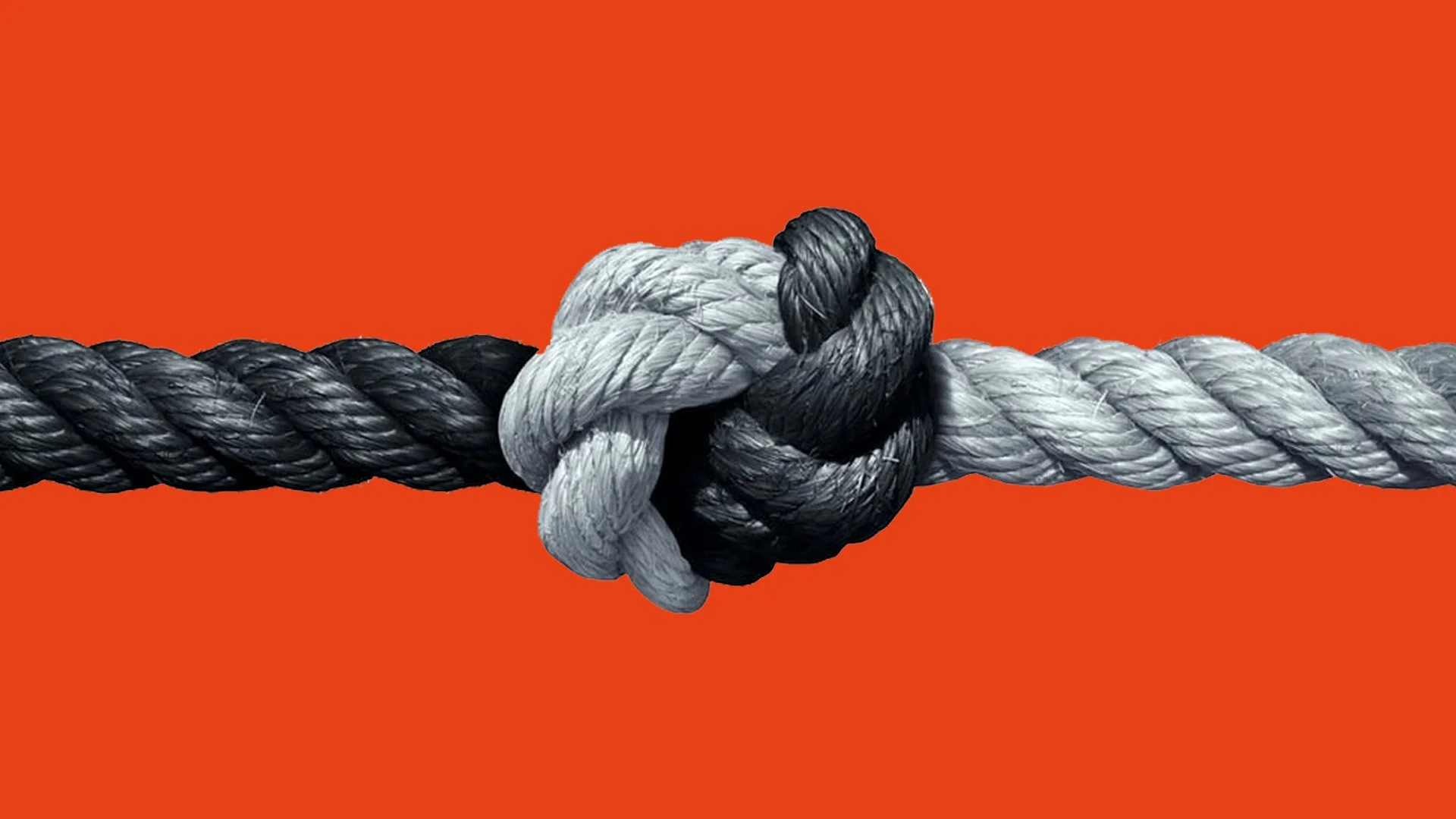
When Growth Means Losing Your Way: How Big Money Warps Nonprofit Missions
I found myself having this conversation again last week, for the umpteenth time, about how we resolve the tension between the needs of the people we serve and the funders we also serve.
It's a conversation every nonprofit leader knows by heart. You've got innovative ideas that work on the streets, in the communities, with the people. Your programs are designed for the people you serve. Your team is passionate. Your impact is measurable and real. You've raised a little bit of money from friends, family, and small funders who believe in your leadership.
And then the big funders start paying attention.
At first, it feels like validation. Someone with life-changing resources sees what you're doing and wants to help you do more of it. But that "help" often comes with strings—lots of them. Quarterly reports with specific metrics. Your overhead ratio will be challenged and your budget rewritten to their specifications. They'll want board members with business backgrounds. They'll want you to replace the passionate friends and supporters who've been with you from the start with "C-suite" types. They want a strategic plan that looks like something McKinsey would produce.
They want you to transform from impassioned leader to CEO.
And slowly, imperceptibly at first, you realize you're no longer building the organization that serves your community best. You're building the organization that funders recognize and trust.
The Pattern Repeats
I've seen it happen over and over. As a nonprofit grows more successful and the funders start to pay attention, the lure of funding warps the mission of the nonprofit. The funding becomes a burden that requires the nonprofit to divide itself into two discrete parts: the "C-suite" and the programs. It's a variation of the corporate takeover of all social movements that Chris Hedges details in his 2010 book, "The Death of the Liberal Class."
I watched Lava Mae, once a darling of innovation, compassion, and human-centered design, slowly buckle under the weight of funder expectations. We refused to take money with encumbrances, and that refusal made us untenable in the long run. Corporate funders wanted marketing opportunities. Private funders wanted impact measured in KPIs that served their needs, not the needs of people on the streets.
Many books and articles have been written about this problem, and as many solutions proposed. Few have succeeded because funders tend to prefer a corporate structure to manage their contributions.
This requires the nonprofit to hire an administrative layer, and the mission splits. The part you care about is service. The part that will take all of your time is administration.
Since the demise of Lava Mae and in the nonprofits where I've worked since, I've spent time looking at solutions from alternative for-profit business models. Books like "Rework" by Jason Fried and David Heinemeier Hansson, and studies on holacratic approaches that create "flat" organizations. None solved the core problem: big money—the kind that makes or breaks programs—looks for its own kind. Academic credentials. College educated. Business minded. Privileged.
Funders rarely see value in lived experience and people-first solutions.
This is the impossible bargain: grow successful enough to attract resources, then watch those resources warp everything you built.
The Science of Mission Drift
In 1983, sociologists Paul DiMaggio and Walter Powell published a framework that explains exactly how this happens. They called it "institutional isomorphism"—the process by which organizations in the same field become increasingly similar to each other over time.
They identified three mechanisms:
Coercive isomorphism: Formal and informal pressures from funders, government agencies, and regulators which force organizations to adopt certain structures and practices.
Mimetic isomorphism: When starting from scratch, organizations imitate other successful organizations in their field, assuming those structures must be what works.
Normative isomorphism: The expectation that leaders have MBAs, that boards include business executives, that strategic plans follow corporate formats.
Their devastating insight remains relevant four decades later: "Bureaucratization and other forms of organizational change occur as the result of processes that make organizations more similar without necessarily making them more efficient."
Organizations become more similar without becoming more efficient. They start looking alike without actually working better.
A 2021 study of Swiss nonprofits found that coercive pressure from funders without providing internal organizational strategies leads directly to mission drift.
2011 research on UK charities showed how government contracting results in organizations "operating well outside their original missions." Three of the charities they studied accepted mission drift as "a fact of life" rather than a problem to resist. When your survival depends on government contracts, and those contracts require you to provide services outside your expertise, you drift.
You have to.
When Success Looks Like Failure
The pattern is consistent: nonprofits compete for social legitimacy and funding, forcing them to adopt structures and practices that funders recognize and trust—even when these structures undermine their distinctive mission-driven characteristics.
A 2014 study documented how activist organizations increasingly look and act like multinational corporations, with narrow thinking, bureaucratic structures, and fundraising priorities that lead them to treat people as donors rather than empowering them as changemakers.
Consider Greenpeace. It evolved from what they called a "motley band" of environmental activists into an Amsterdam-based multinational with thousands of employees managing a multimillion-dollar brand. Or the Susan G. Komen Foundation, whose annual fundraising and education costs exceed $200 million—higher than the GDP of the Marshall Islands—yet operates with corporate efficiency metrics that prioritize scale over impact on actual breast cancer outcomes.
This is what success looks like in the current system: become a corporation that happens to have a charitable mission, rather than a mission-driven organization that needs resources.
The Nonprofit Industrial Complex
The INCITE! Women of Color Against Violence collective gave this a name most of you will recognize: the "nonprofit industrial complex" (NPIC). In their 2007 anthology "The Revolution Will Not Be Funded," they define it as:
"A system of relationships between the State, local or federal governments, the owning classes, foundations, and non-profit/NGO social service & social justice organizations that results in the surveillance, control, derailment, and everyday management of political movements."
INCITE! experienced this directly. In 2004, the Ford Foundation offered them a $100,000 grant. Then they rescinded it because INCITE! supported Palestinian liberation. The message was clear: certain politics are fundable, others are not. And funders decide which is which.
Dylan Rodriguez, contributing to the anthology, argues that the NPIC represents a "White Reconstructionist agenda" that criminalizes radical dissent while philanthropic institutions facilitate state violence under the guise of benevolence. The nonprofit form domesticates radical politics into manageable, fundable activities.
Ruth Wilson Gilmore describes nonprofits as operating as a "shadow state"—taking over functions previously performed by government while allowing the state to shirk responsibilities yet maintain control through funding mechanisms.
Robert L. Allen's historical analysis revealed how Rockefeller, Ford, and Mellon foundations facilitated violent state repression of radical Black liberation movements in the late 1960s-70s by funding moderate elements. They didn't need to directly oppose radical organizing; they just needed to make moderate approaches well-funded and radical approaches financially impossible.
The movements split. The power diffused.
The Cost of Keeping Funders Happy
We read about this every day: universities, corporations, people held hostage, sometimes literally, with terms like DEI and 'woke' suddenly out of favor and dangerous to support. Obeisance to power is compulsory.
Vu Le, founder of Rainier Valley Corps and author of the influential Nonprofit AF blog, describes how "we always make sure that program officers are feeling good, that they like us, because otherwise we could jeopardize funding for our organizations." He coined the term "funder fragility" to describe how funders get offended when criticized, diverting conversation from real issues while the power imbalances teach nonprofits to be afraid to be honest.
He describes a gathering of nonprofit professionals of color that was derailed when a foundation officer took offense to complaints about philanthropy. The entire conversation shifted to managing the funder's feelings rather than addressing systemic problems.
This is how power works: the least vulnerable people require the most protection.
Edgar Villanueva spent 14 years working inside philanthropic institutions. An enrolled member of the Lumbee Tribe, he witnessed what he calls "old boy networks, the savior complexes, and the internalized oppression among the 'house slaves'" while philanthropy sits on $800 billion of assets. Yet only 7-8% goes to communities of color—meaning communities are "stolen from twice."
His observation cuts to the heart of it:
"All of us who have been forced to the margins are the very ones who harbor the best solutions."
But those solutions remain unfunded because funders with the least connection to problems control resources meant to solve them.
What This Means for Second Grace LA
At Second Grace LA, we're committed to radical hospitality that centers the voices and experiences of unhoused community members. We're building systemic solutions that address root causes, not Band-Aid programs that look good in quarterly reports.
This means we make different choices about funding. We prioritize unrestricted gifts that allow us to respond to community needs rather than funder preferences. We measure success by relationships built and dignity restored, not just by numbers that fit neatly into spreadsheets.
We know this path is harder. We know it means growing more slowly. We know it means saying no to some funding opportunities that come with strings attached.
But we also know that the communities we serve deserve better than organizations that have drifted so far from their missions that they no longer recognize themselves.
We belong to each other. Connection precedes correction. And we will not sacrifice our mission for money that comes at the cost of our values.
Next week in Part 2: Funders Prefer Their Own Kind — How mission drift happens not through malice, but through proximity. Funders fund what they understand, what they can measure, what looks like the solutions they would design.
Take Action
Support mission-driven work: Fuel Hope with Second Grace LA
Join the conversation: What's your experience with nonprofit funding pressures? Have you witnessed mission drift? Share your story in the comments.
Learn more about our approach: Second Grace LA on YouTube
Additional Resources
Key Research Studies
Institutional Isomorphism
DiMaggio, P.J. and Powell, W.W. (1983) "The Iron Cage Revisited: Institutional Isomorphism and Collective Rationality in Organizational Fields"
Talking About Organizations Podcast: Institutional Isomorphism
Mission Drift
Understanding and combating mission drift in social enterprises
Surviving mission drift: UK charities and government contracts
The Nonprofit Industrial Complex
INCITE! Women of Color Against Violence: The Revolution Will Not Be Funded
Vu Le: Nonprofit AF on Race, Funder Fragility and Frustration
The Nonprofit Starvation Cycle
The Overhead Myth
Dan Pallotta: The way we think about charity is dead wrong (TED Talk)
The 'Overhead Myth' Debunked, Again: A Q&A With Dan Pallotta
BBB, Charity Navigator, and GuideStar: Dispelling the Overhead Myth
Lava Mae
Unrestricted Funding Evidence
Trust-Based Philanthropy
Alternative Models
Building systemic solutions to homelessness through radical hospitality. Because we belong to each other.
Subscribe to Second Grace LA | Watch on YouTube | All Links
#EndHomelessness #RadicalHospitality #SystemicChange #NonprofitLeadership #SocialJustice