
Part 6: Democracy, Small Scale, and Community Control Produce Better Results from Letters to the Housed by Paul Asplund of Second Grace LA
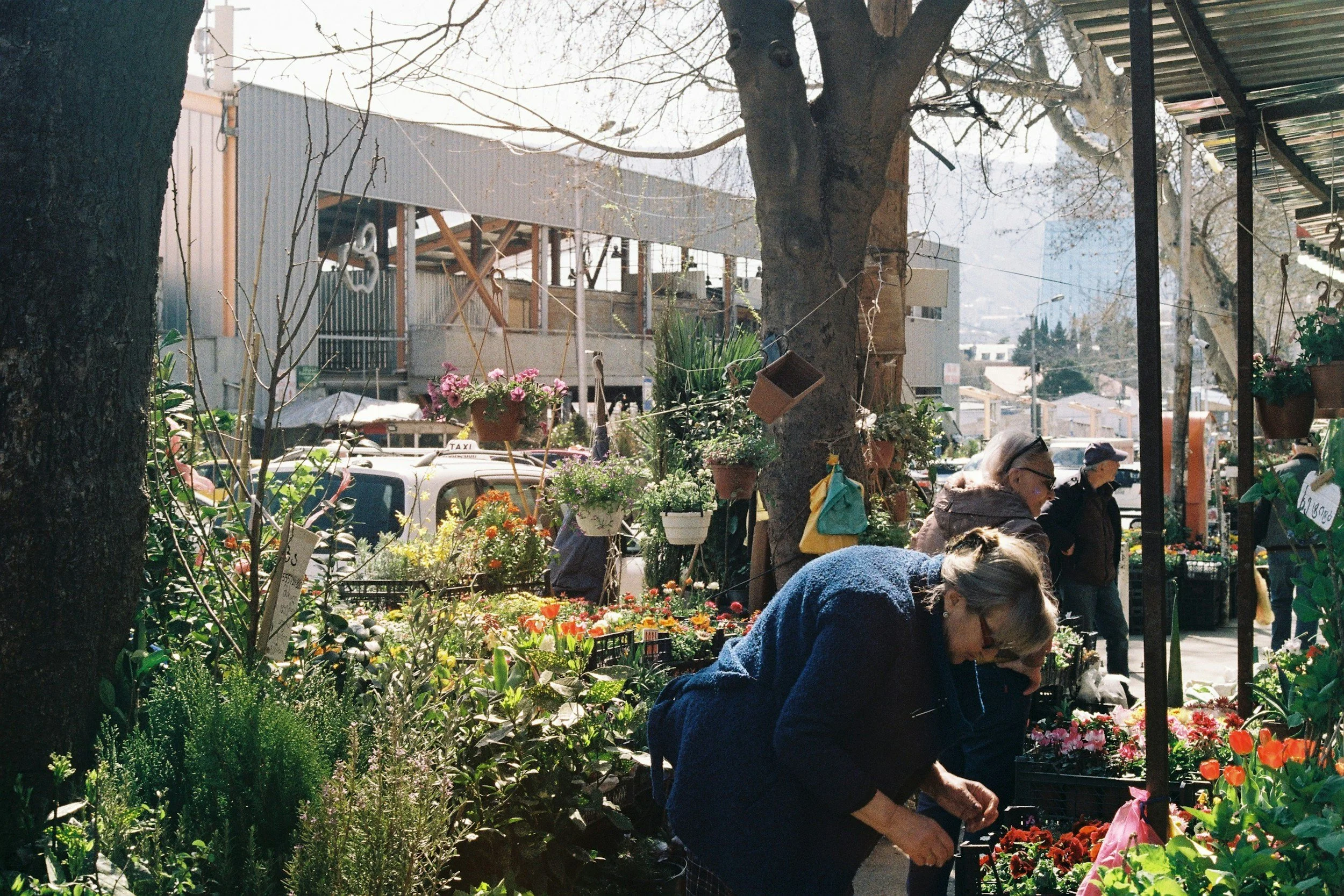
The solidarity economy at work. Image by Unsplash.
Organizations That Prove the Alternatives Work. Part 6: Democracy, Small Scale, and Community Control Produce Better Results
Over the past weeks, we've explored many of the most egregious failings of modern-day philanthropy and presented some alternatives that are having real impact in programs around the world. Trust-based philanthropy, deep funder engagement, and long-term support are proven to work yet not widely practiced. Still, it's progress.
But maybe you're thinking: "That's all well and good for giving money away. But what about organizational structure? You can't actually run an organization democratically. You can't stay small and still have impact. Flat structures don't scale. Worker ownership is a nice idea but it doesn't work in the real world."
Well, if you were thinking all that, you'd be wrong. Let me show you some organizations that prove new models (and some with deep roots and decades of successes) can work, do work, in today's nonprofit world.
United for a Fair Economy: Explicitly Working Small
United for a Fair Economy in Boston provides a powerful counterexample to the "scale or die" mentality that dominates nonprofit thinking.
Director of Cultural Organizing, Eroc Arroyo Montano is explicit about their philosophy: "Those working in grassroots organizations need to make a vow to be clear with themselves on what is possible."
The model:
UFE works with small teams to achieve bigger goals using a "fractals" concept—anything done on small scale can be replicated without requiring the original organization to grow. They emphasize quality of relationships and shared analysis over organizational size. When organizing protests, a small core of organizers can mobilize many. You don't need to hire hundreds of staff; you need deep community connections.
The results:
UFE has successfully impacted social movements through focused, small-scale organizing for decades. They maintain their focus on cultural organizing and grassroots strategies while addressing issues at the local level, ensuring everyone has "a seat at the table."
The takeaway:
Scale isn't the only path to impact. Deep, sustained local work can ripple outward without requiring organizational growth. You don't need to be big to matter. You need to be connected.
Arizmendi Bakeries: The Upside-Down Franchise
The Arizmendi Association of Cooperatives in the San Francisco Bay Area demonstrates how "staying small" can be achieved through federation rather than expansion.
The network:
6 worker-owned bakeries
Support cooperatives for shared services
Approximately 175-200 worker-owners total
Founded in 1996 and inspired by Mondragon cooperatives in Spain and the Cheese Board Collective (founded in Berkeley, CA in 1967), each bakery is a separate cooperative owned by roughly 20-50 workers.
Here's the revolutionary part: It's an "upside-down franchise" where workers in stores govern central administration, not the other way around.
The structure:
All workers are paid equally regardless of tenure
Average wage is double the industry average
They operate by consensus
Two representatives from each bakery serve on the association board
Each bakery "stays small and only grows to the needs of their community and then stops"
When demand exceeds what one bakery can serve sustainably, they replicate a new bakery rather than expanding existing ones.
The results:
Very low worker turnover (the average worker stays 16 years)
Founding owners exceed 16+ years of tenure
Sustained for over 29 years
High quality reputation
Close community connections
Recently launched an affordable housing cooperative (Roots and Returns) to address worker housing needs
This is what success looks like when you prioritize sustainability over scale, democracy over hierarchy, and workers over profits.
Everything traditional business theory says should happen (inefficiency, chaos, poor quality) doesn't happen. Instead, you get workers who stay for 16 years, wages double the industry average, and bakeries so beloved they're community institutions.
Cooperation Jackson: Building Solidarity Economy in Mississippi
Cooperation Jackson provides a model for building interconnected small cooperatives in economically challenging environments.
Founded in 2014 in Mississippi (the poorest state in the US), the network includes:
Freedom Farms (urban farming cooperative)
The Green Team (landscaping/composting)
Center for Community Production (print shop, 3D printing)
Chokwe Lumumba Center for Economic Democracy
Community land trust with approximately 3 hectares
The governance success model:
Deliberately remains small: ~25 plots of land, 100+ dues-paying members
Executive committee works toward complete member control
Annual assemblies with democratic principles
One member, one vote
Emphasis on mutual aid and community support
Integration with People's Assemblies for direct democracy
Working in the poorest state while maintaining radical democratic principles, Cooperation Jackson focuses on building a "solidarity economy" rooted in cooperative principles.
The takeaway:
You can build economic alternatives from the ground up in the most challenging environments. Small-scale, democratic, community-controlled enterprises can thrive where traditional top-down approaches fail. You don't need wealth to build wealth. You need solidarity.
Buurtzorg Netherlands: 14,000 Nurses, No Hierarchy
If you think democratic structures only work for small organizations, let me introduce you to Buurtzorg.
Founded in the Netherlands in 2006, Buurtzorg provides home healthcare with:
14,000+ nurses
900 self-managing teams
Only 8% overhead (versus 25% sector average)
40% fewer care hours required to achieve better patient outcomes
You read that right, they achieve better outcomes with 40% less time and one-third less overhead.
The structure:
No traditional management hierarchy
Nurses work in teams of 10-12
Full autonomy to organize their work, schedule patients, and even hire/fire team members
Currently serves 80,000 patients
Repeatedly ranked as the best employer in the Netherlands
Teams make decisions through the "advice process": seek input from affected parties and experts, but the individual or team closest to the issue ultimately decides.
This produces faster adaptation to patient needs while dramatically reducing overhead and improving outcomes.
The takeaway:
Distributed authority produces better results than hierarchy. Even at scale. Even in healthcare. Everything traditional management theory says should happen (chaos, inconsistency, poor outcomes) doesn't happen. Instead, you get better outcomes, lower costs, happier workers, and more satisfied patients.
All because they trusted nurses to make decisions about nursing.
Cooperative Home Care Associates: Democracy at Scale in the Bronx
Cooperative Home Care Associates operates with 1,005 worker-owners—mostly Black and Latinx homecare workers—demonstrating that democratic structures work even at significant scale in challenging sectors.
The innovation:
"Coaching supervision" system based on inquiry and support rather than command-and-control
Workers elect board members (not outside shareholders)
All supervisors and workers receive training in communication skills, active listening, and emotional response
The results:
Much higher worker retention than competitors
Higher client satisfaction than competitors
Successful demonstration of "Quality Care Through Quality Jobs"
Democratic control produces better outcomes than traditional business structures, despite—or perhaps because of—its alternative approach.
The takeaway:
You can democratize even low-wage service work. And when you do, both workers and clients benefit. The people doing the work know how to do the work. When you give them power to organize it, they organize it better than managers who've never done it.
Community Land Trusts: Permanently Affordable Housing Through Democratic Governance
Community land trusts provide a structural alternative to traditional nonprofit models in housing by separating land ownership from building ownership to keep homes permanently affordable.
The national picture:
Grew from 162 organizations (2006) to 289 today
The California Community Land Trust Network alone: 40+ CLTs
Collectively stewarding 1,600+ homes for 3,500+ Californians
$250+ million kept off the speculative market in community control
The structure:
Each CLT organized as a 501(c)(3) with community-based governance
99-year ground leases
Boards divided equally among: residents on CLT land, residents of the service area not on CLT land, and public interest representatives
Democratic membership open to service area residents
Majority of board members elected by membership
The results:
Homestead Community Land Trust in Seattle demonstrates effectiveness:
Homes appreciate at only 1.5% annually
Allows equity building for homeowners
Maintains affordability in perpetuity
The takeaway:
You can remove housing from speculation permanently while still allowing people to build equity and ownership. Democratic governance ensures accountability to community rather than investors. Scale through replication (289 CLTs) rather than growing individual organizations massive.
Worker Self-Directed Nonprofits: Cooperatives Meet 501(c)(3)s
The Sustainable Economies Law Center in Oakland operates as a worker self-directed nonprofit, demonstrating that you can cross worker cooperative principles with 501(c)(3) structure.
The model:
All workers have power to influence programs, workplace conditions, career paths, and organizational direction
Runs "Collaborate to Co-Liberate" peer learning program with 200 participants from ~100 organizations in 2023
Maintains Google Group and Facebook Group for worker self-directed nonprofit practitioners
Provides legal resources for cooperatives and community enterprises
The takeaway:
Worker self-direction is viable within nonprofit legal structures. You don't have to choose between tax-exempt status and democratic governance.
SELC is dedicated to practicing what it preaches while offering resources and peer networks to support others pursuing similar models.
The Pattern Across All These Examples
Notice what these organizations have in common:
1. They stayed small or scaled through federation
Individual units remain human-scale even as networks grow. Arizmendi replicates bakeries rather than expanding them. Community land trusts number 289 but each serves its local community.
2. They prioritize democracy over efficiency
Yet they're often more efficient than hierarchical alternatives. Buurtzorg achieves outcomes with 40% fewer hours. Arizmendi pays workers double the industry average and still thrives.
3. They maintain flat structures
Decision-making authority distributed rather than concentrated. Nurses make nursing decisions. Bakers make bakery decisions. Community members make community decisions.
4. They build sustainability into their models
Not through endless growth but through deep community connection. Workers stay at Arizmendi for 16 years because they own it. Nurses stay at Buurtzorg because they have autonomy.
5. They've survived for decades
These aren't experiments; they're proven models with track records. Cheese Board: founded 1967. Arizmendi network: 29 years. Buurtzorg: 19 years. Community land trusts: growing for decades.
6. They produce exceptional outcomes
Better worker retention, better client satisfaction, better community impact. Not in spite of their alternative structures, but because of them.
What This All Means
Everything funders say can't work... works.
Everything we're told requires hierarchy... doesn't.
Everything about "you need to scale to have impact"... is wrong.
The evidence is overwhelming and multifaceted:
When funders provide unrestricted, multi-year funding with minimal reporting requirements, organizations get stronger not weaker. 93% of MacKenzie Scott's grantees say it significantly strengthened their mission. Only 2% experienced problems.
When funders invest in infrastructure rather than starving overhead, outcomes improve. There's an optimal level of overhead investment that produces the best results—and it's significantly higher than 10-15%.
When organizations maintain flat, democratic structures, they often outperform hierarchical alternatives. Buurtzorg provides better care with 40% fewer hours. Arizmendi pays double industry average and maintains workers for 16+ years. Cooperative Home Care Associates has higher client satisfaction than traditional competitors.
When communities control resources to solve their own problems, solutions are more effective, more sustainable, and more culturally appropriate. Participatory grantmaking, community land trusts, and worker cooperatives all demonstrate this.
Once Again, The Barrier Isn't Knowledge. The Barrier Is Power.
Foundation leaders can look at data showing unrestricted funding works and still believe (60% of them) that it's risky or ineffective.
Nonprofit boards can see worker cooperatives thrive for decades and still insist hierarchical management is necessary.
Funders can watch MacKenzie Scott strengthen 2,000 organizations with unrestricted giving and still require surveillance-level reporting from their own grantees.
Where The Resistance Lies:
The people with power built their careers, their identities, their status on the premise that their oversight, their expertise, their strategic thinking is what creates impact.
Admitting that communities know better than they do threatens that identity.
Admitting that democratic structures work better than hierarchy threatens their authority.
Admitting that small-scale, deep organizing produces results threatens the metrics they use to justify their approaches.
These aren't easy admissions. But they're necessary ones.
So What Do We Do About It?
If you're a nonprofit leader reading this and thinking, "How do I actually restructure my organization along democratic principles?" There are proven models and robust networks there to support you.
If you're a funder reading this and thinking, "Okay, I'm convinced. What do I actually do differently?" the practices are clear:
Provide multi-year unrestricted funding
Do your own homework instead of making grantees audition
Simplify reporting to what's actually useful
Be transparent about your processes and resources
Actually listen to feedback and change based on it
Offer support, not surveillance
If you're a community member thinking, "None of the nonprofits serving my community look like these examples," you're right. And that's the problem this entire series has been documenting.
The Choice We Face
Funders face a choice: cede control or accept responsibility for the continued failure to solve social problems.
Nonprofit leaders face a choice: restructure toward democracy and community control, or continue replicating the systems that aren't working.
And communities face a choice: demand power over resources meant to serve them, or continue accepting that wealthy outsiders will decide what they need.
There's no middle ground. There's no way to maintain the current power structures and still claim to trust communities. There's no way to require surveillance-level reporting and still claim to believe in nonprofit competence.
Either you trust them or you don't.
Either you believe communities know what they need or you don't.
Either you're willing to cede power or you're not.
What Comes Next
The revolution will not be funded—at least not the way funding currently works.
But it can be resourced. It can be supported. It can be enabled.
When communities control resources. When organizations operate democratically. When funders actually trust the people they fund. When success is measured by depth of impact rather than scale of operations.
Implementing these ideas, policies, and practices will change everything about the way nonprofits and funders relate to each other. It will challenge decades of broken processes and centuries of assumptions about who deserves to be helped. It will require all of us to change in ways we can't, and shouldn't control.
The only question left is: who's willing to do it?
Subscribe to Second Grace LA for more evidence-based analysis on systemic solutions to homelessness and community change.
Subscribe to our Substack | Watch on YouTube | Support Our Work
Key Organizations & Links Referenced
United for a Fair Economy https://www.faireconomy.org
Arizmendi Association of Cooperatives http://www.arizmendi.coop
Cheese Board Collective https://cheeseboardcollective.coop
Cooperation Jackson https://cooperationjackson.org
Buurtzorg Netherlands https://www.buurtzorg.com
Cooperative Home Care Associates https://www.chcany.org
California Community Land Trust Network https://www.cacltnetwork.org
Homestead Community Land Trust https://www.homesteadclt.org
Sustainable Economies Law Center https://www.theselc.org
MacKenzie Scott / Yield Giving https://www.yieldgiving.com
Trust-Based Philanthropy Project https://www.trustbasedphilanthropy.org
Grounded Solutions Network (CLTs) https://groundedsolutions.org