
Community Builds What the Feds Won't Fund
Letters to the Housed by Paul Asplund of SecondGrace.LA | August 4, 2026
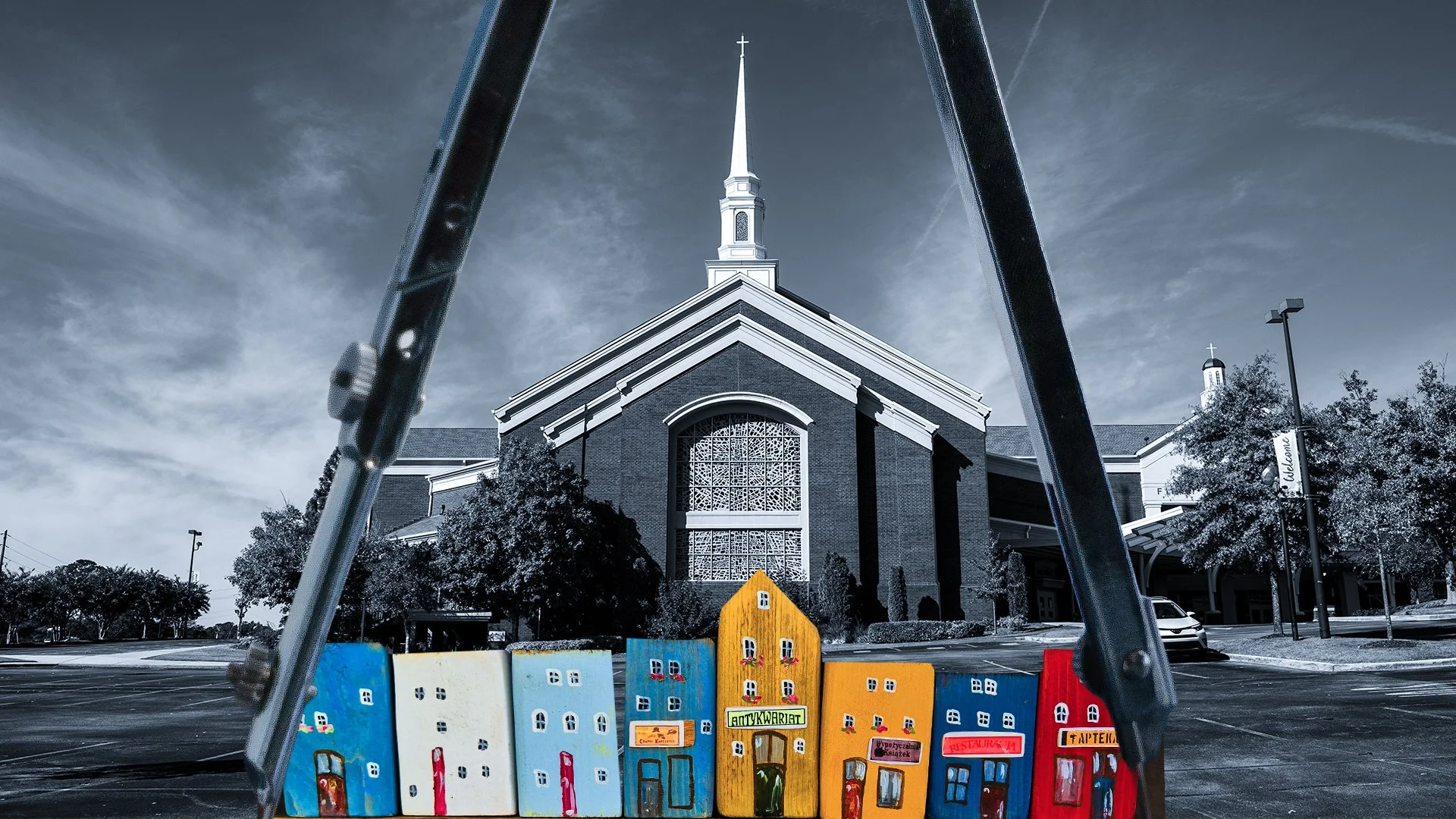
No federal dollars. No press office. Just a lot, a plan, and a community who refused to wait. Visual by Delux Multimedia
Over the past few weeks I've written about the federal government's withdrawal from LA's housing infrastructure: the HUD suspension of LAHSA's funding, the lawsuit that followed, and the economic argument for why disinvestment costs more than investment ever would. The picture that emerges from all of that is genuinely grim. Washington has made its intentions clear, the courts are working slowly, and the math on new construction in LA remains punishing.
So this week I want to write about something different. Not about what's being taken away, but about what's being built anyway, and by whom.
Because while the federal government has been dismantling the Continuum of Care, a different infrastructure has been quietly growing. It doesn't have a press office. It doesn't show up in the HUD budget. And it is doing some of the most durable housing work I've seen in twenty years of paying attention to this city.
This Land Is Our Land
The central problem with affordable housing in Los Angeles has always been land. Social Housing continues to lose footing because once a piece of land is developed at market rate, it is effectively gone from the affordable housing supply forever. You cannot negotiate it back. The speculators have spoiled it.
As we talked about in our series on the Vienna model, community land trusts (CLT) solve this problem by removing land from the speculative market permanently. The trust holds the land in perpetuity. Residents own their homes or lease their apartments at below-market rates, and when they sell, affordability covenants pass to the next resident. The land never returns to speculation. The affordable housing it produces is affordable not just today but in thirty years, in fifty years, for whoever needs it then.
Once a piece of land is developed at market rate, it is effectively gone from the affordable housing supply forever. Community land trusts solve this problem by removing land from the speculative market permanently.
And Los Angeles has a coalition of community land trusts that has been building this model neighborhood by neighborhood, often without federal support, often against active opposition.
T.R.U.S.T. South LA, a Black-led, Black and Brown-focused CLT operating in the southwest and mid-city corridors, recently opened 140 units of affordable housing near the Expo/Vermont Metro Station. They are also working on parcels along the Exposition Light Rail line and in the Crenshaw corridor, focused on keeping longtime residents in communities that development pressure has been steadily pushing them out of.
In El Sereno, a CLT grew out of residents' struggle against a decades-long Caltrans project that had been evicting families and selling their homes to developers at market value. Those residents organized, acquired political leverage, and are now in the process of taking over dozens of Caltrans properties and converting them to permanently affordable housing. The community that fought to stay is becoming the community that owns the land it lives on.
Downtown Crenshaw Rising has set an ambitious target: to become the largest CLT in America by the end of the decade, building across a region covering more than 40 square miles through scattered-site acquisition in the Crenshaw corridor. The organization's founder is a fourth-generation Angeleno whose ancestors helped establish the city's first Black-owned banking institution in 1924. The through-line from that history to this work is not incidental. Community land trusts in Black neighborhoods are explicitly about repairing a century of displacement, redlining, and urban renewal that stripped generational wealth from communities that built this city.
The Answer Is In Church Parking Lots
On May 27, in a South Los Angeles parking lot that belongs to St. Rest Friendship Baptist Church, Logos Faith Development broke ground on 138 units of affordable housing. Phase one is 62 units. The land is the church's. The development is made possible by California's SB 4, the "Yes in God's Backyard" law that took effect in 2024 and streamlined affordable housing approvals on land owned by religious institutions.
This is one of many similar projects coming together in recent months. Faith-based institutions across LA hold significant underutilized land, often in transit-served neighborhoods, often in communities with the highest housing need. I've sat in informational meetings hosted by the Faith Collaborative to End Homelessness and information on how churches can access these funds is free and plentiful. One developer working in this space represents several hundred faith institutions statewide, all with surplus land and a desire to use it consistent with their mission. A consultant who has studied this estimates there is enough underutilized faith-owned property in California to comprise a city roughly the size of Stockton (pop. 324,597).
The financial logic works for churches too. Many faith communities are land-rich and cash-poor: they hold valuable parcels they cannot afford to maintain, cannot sell without betraying their community mission, and cannot develop without a financing partner. Long-term land leases to affordable housing developers provide income, preserve their missions, and keep families housed. Mayor Bass's Executive Directive 1 has accelerated approvals for qualifying projects, and SB 4 removed much of the entitlement friction that previously made these projects brutally slow.
This model will not solve LA's housing crisis. But it is building units that could not otherwise be built, on land that would otherwise sit underused, at costs well below new construction, without a dollar of federal CoC funding.
Little Tokyo and the Long View
Between 1973–1975, a group of community organizations in Little Tokyo, the Japanese American Citizens League, the Southern California Gardeners Federation, the Southern California Christian Federation, and the Los Angeles Buddhist Church Federation, came together to build affordable senior housing. Their neighborhood was being dismantled by Civic Center expansion. Their elders, many of them first-generation immigrants, were living in decaying hotels scheduled for demolition. Nobody was coming to help. So they built the solution themselves.
Little Tokyo Towers has stood for fifty years and recently completed a $50.7 million rehabilitation: seismic retrofits using fiber reinforced polymer, new elevators, energy-efficiency upgrades, renovated apartments, new community spaces, and an additional 55 years of affordability covenants secured so the building cannot convert to market rate. The rededication ceremony was held in October 2024. The people who built it in 1975 understood something that is easy to forget in a political moment defined by crisis: durable housing infrastructure is built across generations, not grant cycles.
The people who built it in 1975 understood something that is easy to forget in a political moment defined by crisis: durable housing infrastructure is built across generations, not grant cycles.
Little Tokyo itself is under pressure again. Downtown development has been encroaching for years. The National Trust for Historic Preservation put the neighborhood on its 2024 list of the 11 most endangered historic places in the country. The community's response is the same as it was fifty years ago: build the housing, hold onto the land, stay.
What This Requires of Housed Neighbors
I write this newsletter to housed neighbors, not to policymakers or funders, though sometimes those overlap. And there is a huge role housed neighbors can actually play in whether this work succeeds or fails.
Community land trusts need political cover. Every time a CLT tries to acquire a parcel, or a church breaks ground on affordable housing, or a tenant organization wins a zoning variance, there are neighbors who oppose it. Not always out of bad faith. Sometimes out of genuine uncertainty about what affordable housing means for a neighborhood. The most useful thing a housed neighbor can do in those moments is show up on the right side of the room.
This work also needs capital that isn't federal. Measure ULA's $1.2 billion, Measure A's ongoing revenue, Homekey+ conversion funding, California's $11.25 billion housing bond which will be on the November ballot. All of these are levers that community organizations can use if housed neighbors support them and defend them when they're challenged. The opposition to these measures is organized and well-funded. The people who benefit from permanently affordable housing are often not in a position to fight for it themselves.
And finally, this work needs the sustained attention of people who are paying attention. The federal government is betting that the defunding of LAHSA, the elimination of CoC funding, and the withdrawal from Housing First policy will happen quietly, without enough organized resistance to reverse it. The community organizations building land trusts, converting church parking lots, and rehabilitating fifty-year-old senior housing are making the opposite bet: that enough people care enough to keep building, keep organizing, and keep demanding that their neighbors have somewhere to live.
The community organizations building land trusts, converting church parking lots, and rehabilitating fifty-year-old senior housing are making the opposite bet: that enough people care enough to keep building, keep organizing, and keep demanding that their neighbors have somewhere to live.
I think they're right. The evidence is all around us.
More soon.
Paul
SOURCES
T.R.U.S.T. South LA / Rolland Curtis Gardens: https://trustsouthla.org/our-work/ and https://abodecommunities.org/rcgstory/
Downtown Crenshaw Rising (Nonprofit Quarterly, October 2025): https://nonprofitquarterly.org/in-los-angeles-a-black-led-community-land-trust-builds-for-the-future/
Downtown Crenshaw Rising organization: https://www.downtowncrenshaw.com/
Logos Faith Development / St. Rest groundbreaking (Business Wire, May 2026): https://www.businesswire.com/news/home/20260527115435/en/Logos-Faith-Development-St-Rest-Friendship-Baptist-Church-Broke-Ground-on-New-Faith-Based-Affordable-Housing-Community-in-Los-Angeles
Logos Faith Development construction loan / pipeline details (YieldPro, May 2026): https://yieldpro.com/2026/05/st-rest
Little Tokyo Towers rehabilitation (Rafu Shimpo, October 2024): https://rafu.com/2024/10/little-tokyo-towers-rededication-ceremony-and-open-house/
Little Tokyo Towers — LA Conservancy: https://www.laconservancy.org/learn/historic-places/little-tokyo-towers/
Little Tokyo Towers — Affordable Housing Finance: https://www.housingfinance.com/developments/little-tokyo-tower-undergoes-rehab-to-continue-serving-seniors-in-los-angeles_o
California SB 4 (“Yes in God’s Backyard”): https://leginfo.legislature.ca.gov/faces/billNavClient.xhtml?bill_id=202320240SB4
Production & deployment by Delux Multimedia.