
The Investment We Chose Not to Make | LA Housing Cost
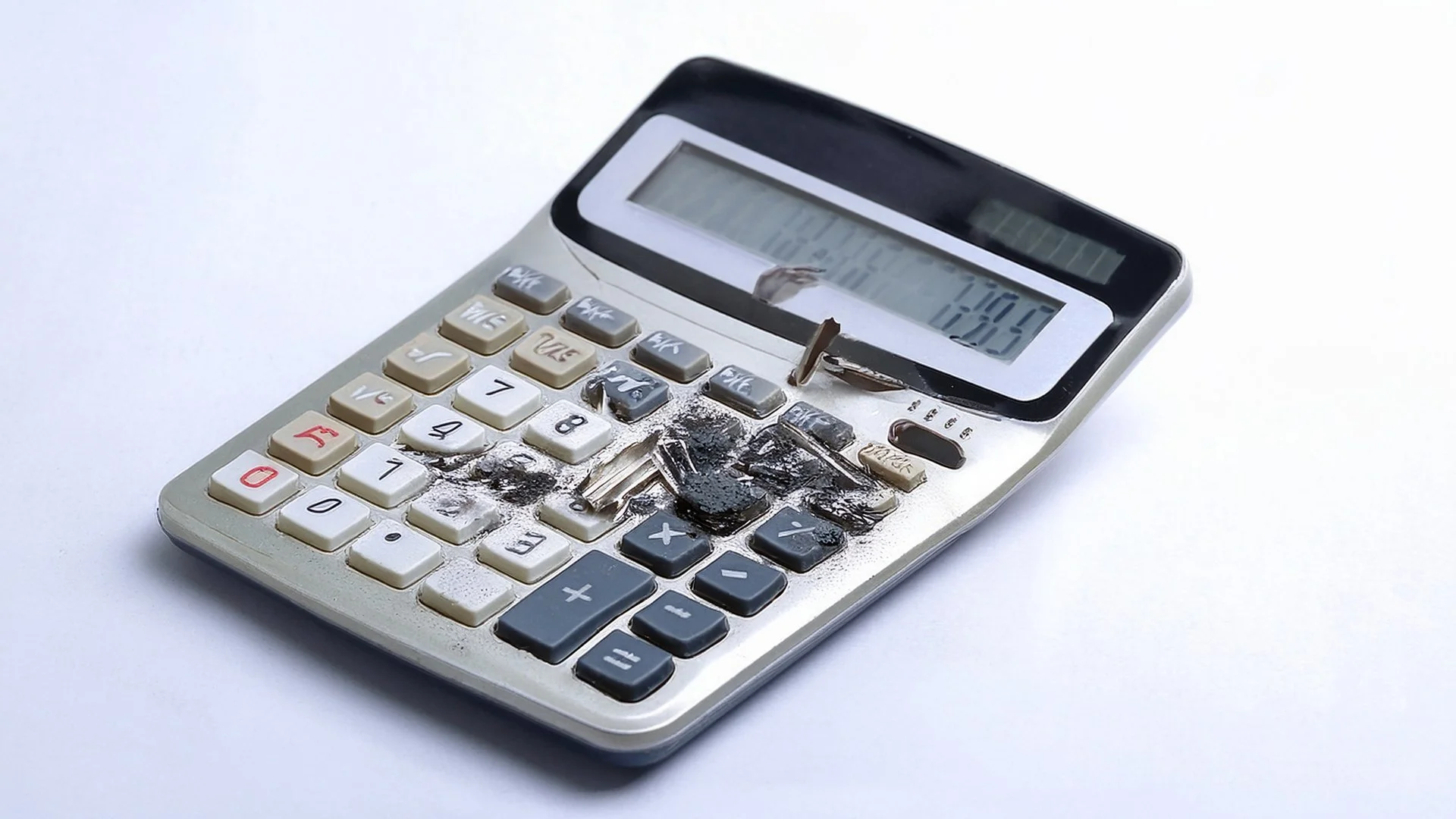
Questionable calculations: Every dollar not spent on stable housing tends to become two dollars spent on emergency intervention. | visual by delux multimedia
Letters to the Housed by Paul Asplund | July 28, 2026
Last week I wrote about LAHSA's lawsuit against HUD and what it means for the 11,000 people currently housed through federal CoC funding. A court fight over money that's already been appropriated, already been awarded, and is simply being withheld by an administration that continues to demonstrate a belief that the rules don't apply to it.
This week I want to step back from the lawsuit and ask a question I think doesn't get asked enough. Not what happens when we cut housing funding, though that's now documented in excruciating detail. The question I want to ask is about choices and lost opportunities: what would it have actually cost to build what we needed, and what have we paid instead for not doing it?
Because I think we've been having the wrong argument for a long time. The argument we have is whether we can afford to invest in housing. The argument we should be having is whether we can afford not to.
We've Gone Over These Numbers Before
In June, I wrote about a report from the Canadian Centre for Economic Analysis (CANCEA), commissioned by the Greater Toronto and Hamilton Area Community Housing Collaborative with support from Scotiabank. I want to go back to it now, because the federal picture has been clarified since then, and these numbers read differently in the context of a lawsuit over withheld congressional appropriations. The report modeled three funding scenarios for public housing over the next 25 years: reduced investment, the status quo, and a combined pathway of renewal plus new construction.
As we discussed in June, the numbers are striking. This is a Canadian study, modeled on the GTHA housing stock, not LA County. The unit costs, the healthcare system, the policy context are all different. But the underlying economics are the same, and the proportional comparisons easy to translate.
When looking at reduced funding, the CANCEA report found a benefit-cost ratio of -0.08. For every dollar the government fails to invest, it loses more than that dollar in social and economic costs: emergency services, healthcare, shelter system spending, lost productivity, and the long tail of chronic homelessness.
Using the combined investment pathway shown in the CANCEA report (renewal of existing stock plus new construction), the benefit-cost ratio is 2.80. For every dollar invested, the return is $2.80 in social and economic value. The combined pathway generates an estimated $48.3 billion in social value, creates 354,500 cumulative job-years, reduces healthcare burden by $1.5 billion, and results in 4,700 fewer people experiencing homelessness by 2050 compared to the reduced-funding scenario.
The most striking number is a health outcome comparison. Under reduced funding, 67% of public housing residents are projected to be in poor or very poor health by 2050. Under combined investment: 12%.
Sixty-seven percent versus twelve percent. Because of a funding decision.
The LA Version of This Calculation
We don't have a CANCEA report for Los Angeles, and not all of the numbers translate directly. But we do have enough local data to understand how these choices might play out.
As you most likely know by now, building a one-bedroom unit of affordable housing in LA currently costs between $700,000 and $800,000. That number has been cited so often it's almost lost its power to shock. A billion dollars buys roughly 1,250 units at that cost. LA County has an estimated 75,000 people experiencing homelessness on any given night, and a housing deficit of somewhere between 500,000 and 3.8 million units depending on how you measure need.
Meanwhile, what we actually spend managing the crisis runs into the billions annually across county, city, state, and (until recently) federal funding streams. And that spending does not include the downstream costs that don't show up in any housing budget: emergency room visits, inpatient psychiatric holds, law enforcement contacts, criminal justice involvement. A RAND study of LA County's Housing for Health program found that the annual public cost per person in the year before receiving housing was $38,146, dropping to $15,358 in the year after, a figure that doesn't include the full downstream costs of criminal justice, emergency services, and lost productivity that other researchers have estimated push the true annual cost well above $35,000. Either way, it is more than what a permanent supportive housing unit costs to operate once it exists.
The Homekey+ program, California's most successful housing production effort in decades (yet not without its own set of problems), converts motels and commercial properties into permanent supportive housing at around $144,000 per unit, a fraction of new construction costs. Since 2020 it has created more than 15,000 homes statewide. That model works. It is also nowhere near the scale of what's needed, and it depends heavily on federal capital that is now under threat.
Measure ULA, the transfer tax on luxury real estate sales that Los Angeles voters approved in 2022, has raised $1.2 billion over three years. Seventy percent goes to affordable housing production and preservation, thirty percent to homelessness prevention. It is currently funding the construction of 1,790 affordable units at an average cost of $780,000 each. Measure A, the county's sales tax measure, is building out a more coordinated system of homeless services. These programs both passed with strong voter support but they can't succeed on their own.
And the federal government is suing to stop the funding coordinator that makes the system whole.
The Fiscal Year 2027 Budget Proposal
The Trump administration's proposed FY 2027 budget, released April 3, doesn't just defund LAHSA. It proposes eliminating the Community Development Block Grant program entirely. It proposes eliminating HOME, the federal affordable housing block grant that California receives more than $300 million from annually. It proposes cutting the Community Development Financial Institutions Fund by 63%. It calls for ending the Continuum of Care program as a congressional mandate and replacing it with discretionary direct grants from HUD to whoever HUD decides deserves them.
These cuts represent a structural withdrawal from the federal government's role in housing that has been bipartisan policy across five administrations.
The argument the administration offers is that the current system has failed. Los Angeles homelessness is up. Billions have been spent. The CoC program is, in its words, "burdensome," "failed," and "unaccountable."
Yes, the current system has not ended homelessness. LAHSA has had real governance problems, as I've written before. The cost-per-unit of new construction in LA is genuinely indefensible. But there was never enough money in place to build the housing we needed. Never enough to expand Medi-Cal to cover everyone who needed it. Never enough to support the community building necessary to heal our neighborhoods.
But the CANCEA report's central finding is precisely relevant here: the alternative to an imperfect system is not a better system. It is a more expensive one. When you disinvest from housing infrastructure, you don't save the money. You spend it downstream, in harder places, on worse outcomes, for more people.
What the Voters Have To Say
Los Angeles voters, in 2022, approved a new tax on luxury real estate sales and directed the revenue to housing and homelessness prevention. In 2024, county voters approved Measure A, a new sales tax for homeless services. Both passed with strong majorities. Both represent a direct democratic decision that this community considers housing investment a public responsibility.
The California legislature has a $10 billion affordable housing bond (SB 417) working through the process. The state's Homekey+ program has $2.2 billion available through Proposition 1. California receives and deploys the largest HOME allocation in the country.
None of this fills the gap left by federal withdrawal. None of it comes close. But it reflects something important: when people are given a clear choice about whether to invest in housing, they tend to say yes.
The CANCEA report's 2.80 benefit-cost ratio isn't an argument for housing investment as charity. It's an argument for housing investment as fiscal common sense. Every dollar not spent on stable housing tends to become two dollars spent on emergency intervention. We've been choosing the more expensive option for decades, and calling it fiscal restraint.
The question isn't whether we can afford to invest in housing. It's whether we can afford to keep paying for what happens when we don't.
Here's What I'm Following
The LAHSA lawsuit TRO hearing. If the court grants preliminary relief before August 26, the region can still submit its 2026 NOFO application and preserve the funding pipeline. If it doesn't, the compounding cost of federal withdrawal starts now.
California's SB 417 affordable housing bond. If it makes it to the November 2026 ballot, it could provide $10 billion in state investment to partially offset federal cuts. Whether LA's political opposition to it holds is worth following.
And Homekey+: $2.2 billion in Proposition 1 funding is still available, with no federal strings attached. That's 15,000 potential units at Homekey+ costs. Watch where those dollars go.
More soon.
Paul
Sources
CANCEA, "The Public Housing Dividend" (June 2026): https://www.newswire.ca/news-releases/new-research-demonstrates-102b-in-value-could-be-created-by-investing-in-public-housing-infrastructure-815749758.html
CANCEA full report and data: https://www.cancea.ca/index.php/2026/06/01/the-public-housing-dividend/
California HCD Homekey program: https://www.hcd.ca.gov/funding/homekey
Homekey 15,000 unit milestone (Governor's office): https://www.gov.ca.gov/2024/01/18/homekey-hits-milestone-15000-homes-created-since-program-began/
Measure ULA revenue and housing units (Wikipedia, sourced from RAND and WSJ, May 2026): https://en.wikipedia.org/wiki/Measure_ULA
Measure ULA RAND analysis (May 2026): https://www.rand.org/pubs/research_reports/RRA4928-1.html
Measure ULA $361M funding round (The Real Deal, May 2026): https://therealdeal.com/la/2026/05/04/karen-bass-approves-measure-ula-funds-for-affordable-housing/
RAND Housing for Health / public cost of homelessness in LA: https://www.rand.org/pubs/research_briefs/RB10000.html
Trump FY2027 Budget HUD cuts overview (Bipartisan Policy Center, April 2026): https://bipartisanpolicy.org/article/president-trumps-fy2027-budget-overview-of-housing-programs/
Trump FY2027 Budget CDBG/HOME/CDFI cuts (Novogradac, April 2026): https://www.novoco.com/notes-from-novogradac/fy-2027-trump-budget-request-proposes-73-billion-in-domestic-nondefense-cuts-including-a-107-billion-cut-for-hud-and-a-2045-million-cut-to-the-cdfi-fund
Trump FY2027 Budget summary (NADO, April 2026): https://www.nado.org/president-trump-releases-fy27-budget-request/
Article: The Investment We Chose Not to Make Publish date: July 28, 2026 Production/deploy: Delux Multimedia