
Just Forty Dollars a Night | Letters to the Housed by Paul Asplund
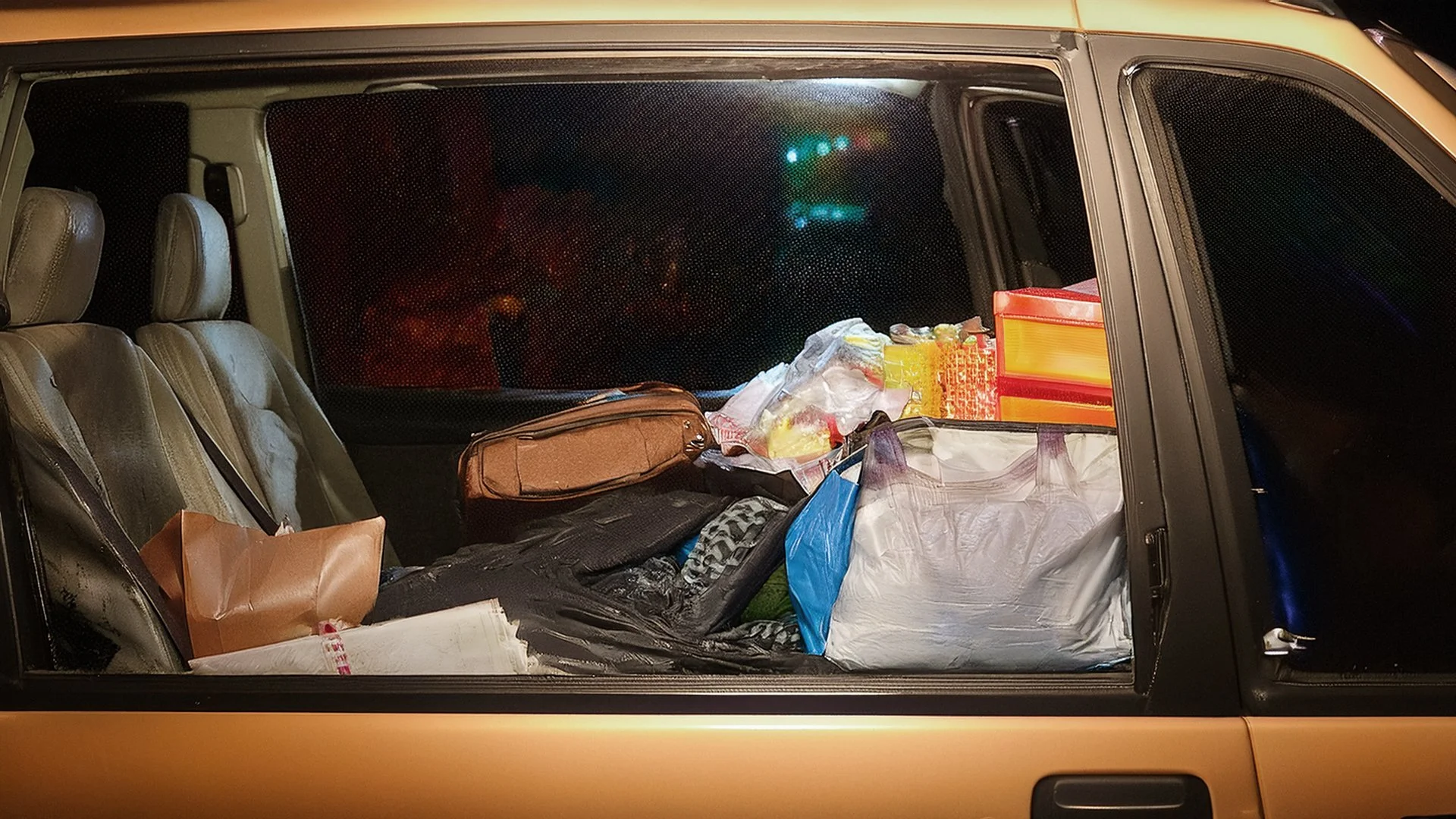
Someone slept here last night. They'll need somewhere to park tomorrow. Visual by deluxmultimedia
Letters to the Housed | May 5, 2026
A few years ago, I got on a call with a man named Scott Sale. He had an idea I'd never heard anyone put into practical terms before: what if we used the parking lots that sit empty every night and made them a first stop for people who had lost their housing but still had their car?
I was immediately convinced. I had heard too many nightmare stories about the estimated 1,000-night gap between the moment someone lands on the streets and the moment they find their way into permanent housing. That gap is where people get robbed, harassed, cited by police for parking in the wrong place, and pushed further and further from stability. It's where their dignity is destroyed and their trust broken. It's where we fail, sometimes with dire consequences, to provide for people who have fallen on hard times. Granted, a car is not a solution. But it can be a bridge, if we treat it like one.
What Scott was describing, and what became Safe Parking LA, is a program built on the idea that people living in their vehicles deserve the same dignity, safety, and access to services as anyone else experiencing homelessness. We talked about using the evening hours to offer showers and case management, about how important it was to bring services to where people were rather than making them come find services on their own. We talked about Radical Hospitality, about what it actually means to meet people where they are.
Over the years, I've watched Safe Parking LA grow into the largest safe parking program in Los Angeles and the only provider of lots exclusively focused on vehicular homelessness. I partnered with them to bring showers to two of their sites. I've worked closely with Andrew Morales and Matt Tecle. I have seen, up close, what this program does and who it serves. And now the city and county are moving to defund it.
People don't always move from a house to the street. For many, there's a step in between, and Safe Parking LA is often the first hand extended.
The Largest Form of Unsheltered Homelessness in LA
Vehicle habitation is not a minor subset of homelessness in Los Angeles. It is the largest form of unsheltered homelessness in the county. Across all 15 City Council districts, Safe Parking LA's own data counts 6,615 cars, vans, and RVs currently occupied by people with nowhere else to go. Nearly 50% of LA County's unsheltered population lives in vehicles.
These are not people who have given up. Safe Parking LA's data shows they are often working or already connected to services. What they lack is one thing: access to affordable housing. In the meantime, a safe, legal parking space — with access to restrooms, security, and case management — helps keep them from falling further into crisis.
What the Numbers Actually Say
In November 2025, LAHSA issued a memo recommending that safe parking programs be defunded, describing them as "ineffective compared to other strategies." The justification was that only 44% of safe parking spots were occupied countywide in the last fiscal year.
That number is misleading, and Safe Parking LA's data proves it. Across SPLA's four active sites, the yearly average permit utilization for fiscal year 2026 is 84.17%. Out of 1,150 total available permits, 968 were issued. The breakdown by site: 360 at Figueroa, 300 at Iowa, 300 at Reseda, 190 at National. Only 182 permits went unused across the entire system.
Matt Tecle, Safe Parking LA's executive director, pushed back directly: the problem isn't with their program. The problem is that LAHSA aggregated performance data across all providers and used it like a broad brush, obscuring the difference between programs that are struggling and programs that are working. As Tecle wrote, the city is using "an axe to eliminate one of the most cost-effective early interventions we have."
The cost of a safe parking spot through Safe Parking LA: approximately $40 per night. Compare that to emergency shelter, to the cost of policing encampments, to the downstream expense of a housing crisis that goes uninterrupted.
The city is using 44% occupancy across all providers to shut down a program operating at 84%.
Cost, Outcomes, and the Housing Pipeline
Safe parking is one of the most cost-efficient interventions in the homelessness response system. Across SPLA's five sites in fiscal year 2025, the average cost per unique participant was $5,729. The total contract amount across all sites was $1,810,400, serving 316 clients.
More than cost: 40.74% of people who exited the program in FY25 moved to a positive housing destination. That is not a program that warehouses people. That is a program that moves people toward stability.
Safe parking also does something most interventions don't: it serves participants while simultaneously reducing neighborhood impacts, giving nearby residents and businesses a structured, accountable alternative to unmanaged vehicular encampments. It is one of the few tools in the system that works for everyone.
For the city to eliminate Safe Parking LA at a total annual cost of $1,450,000 for four sites — while continuing to spend tens of millions on interventions that cost more per person and produce fewer exits to housing — is not a budget decision grounded in evidence.
$1,450,000 funds four sites, 316 clients, and a 40% housing exit rate. The city spends more than that on a single mile of road resurfacing.
The County's Shutdown, Coming June 30
At the county level, HOPICS — which operates three safe parking sites in South Los Angeles and Compton — has been told its funding is being cut. All three sites will shut down by June 30, 2026, displacing roughly 36 households currently enrolled, with capacity for 60 spaces. These are people and families who will be forced back into, as HOPICS describes it, "unregulated and unsafe environments," with increased exposure to theft, harassment, citations, and instability.
The county approved a homelessness spending plan in February 2026 that outlined these funding changes. The final budget takes effect July 1, the same week the FIFA World Cup begins in Los Angeles.
Meanwhile, the city's cuts are being framed as a necessity driven by a court settlement in the LA Alliance for Human Rights lawsuit, which requires the city to redirect spending toward creating 12,915 new shelter beds and housing units. The City Administrative Officer concluded that homelessness spending must be cut by up to 15% to meet this requirement. Advocates for unhoused people have disputed this interpretation, arguing the court never required the city to eliminate services for people currently on the street.
What We Are Actually Abandoning
It actually made me angry when I read about the plans to defund this program. I was there at the beginning and I saw the brilliance of this approach to bringing services to people in vehicles at night, when most providers aren't working. I brought showers to two of their sites because I believed then, and believe now, that dignity cannot wait for a shelter bed.
Safe Parking LA is not a perfect solution to homelessness. No single program is. But it is a bridge between the moment someone loses their housing and the moment they might find their way back, and it is one of the few programs that treats that bridge as worth building carefully. It is hyper-conscious about its relationships with surrounding neighborhoods. It offers services with warmth. It gets people document-ready for housing applications. It does this on a shoestring.
To defund it now, when people are losing housing and moving into their cars faster than ever, is to remove a net precisely when people are falling. The city is not making a strategic trade-off. It is making a mistake.
Safe Parking LA does not exist despite limited resources. It has proven what is possible because of how it uses them.
What You Can Do Right Now
The final city budget vote happens in June. There is still time to change this.
First: Find your council district below, or look it up at neighborhoodinfo.lacity.org. Call or email your council member directly. You don't need a prepared speech. You just need to say: "Restore funding for Safe Parking LA and safe parking programs across the city." The budget is not final.
Second: Follow Safe Parking LA and let them know this community stands with them. Instagram @safeparking_la, X/Twitter @safeparkingla, and safeparkingla.org to donate or learn more.
Third: If you want to contact the Mayor's Office directly, that number is 213-978-0600.
Los Angeles City Council — All 15 Districts
Not sure which district you're in? Find out at neighborhoodinfo.lacity.org
CD 1 — Eunisses Hernandez | 213-473-7001 | councilmember.hernandez@lacity.org
CD 2 — Adrin Nazarian | 213-473-7002 | councilmember.nazarian@lacity.org
CD 3 — Bob Blumenfield | 213-473-7003 | councilmember.blumenfield@lacity.org
CD 4 — Nithya Raman | 213-473-7004 | contactcd4@lacity.org
CD 5 — Katy Yaroslavsky | 213-473-7005 | councilmember.yaroslavsky@lacity.org
CD 6 — Imelda Padilla | 213-473-7006 | councilmember.padilla@lacity.org
CD 7 — Monica Rodriguez | 213-473-7007 | councilmember.rodriguez@lacity.org
CD 8 — Marqueece Harris-Dawson | 213-473-7008 | councilmember.harris-dawson@lacity.org
CD 9 — Curren D. Price, Jr. | 213-473-7009 | councilmember.price@lacity.org
CD 10 — Heather Hutt | 213-473-7010 | councilmember.hutt@lacity.org
CD 11 — Traci Park | 213-473-7011 | councilmember.park@lacity.org
CD 12 — John Lee | 213-473-7012 | councilmember.lee@lacity.org
CD 13 — Hugo Soto-Martinez | 213-473-7013 | councilmember.soto-martinez@lacity.org
CD 14 — Ysabel J. Jurado | 213-473-7014 | councilmember.jurado@lacity.org
CD 15 — Tim McOsker | 213-473-7015 | councilmember.mcosker@lacity.org
And finally, if you are a housed Angeleno reading this: please understand that vehicular homelessness is not a fringe issue. It is happening in your neighborhood, in the parking lots near your grocery store, on the street outside your office. Nearly half of all unsheltered people in Los Angeles are living in vehicles. These are your neighbors. They deserve a safe place to sleep tonight.
I've spent years believing that when people understand what is actually happening, they act. So now you know. I hope it moves you to say something.
— Paul
Paul Asplund is the founder of Second Grace LA. Letters to the Housed publishes weekly at secondgracela.substack.com.