
Part 1: Building Solutions from the Ground Up: Inside LA's Homelessness Design Lab from Letters to the Housed by Paul Asplund of Second Grace LA
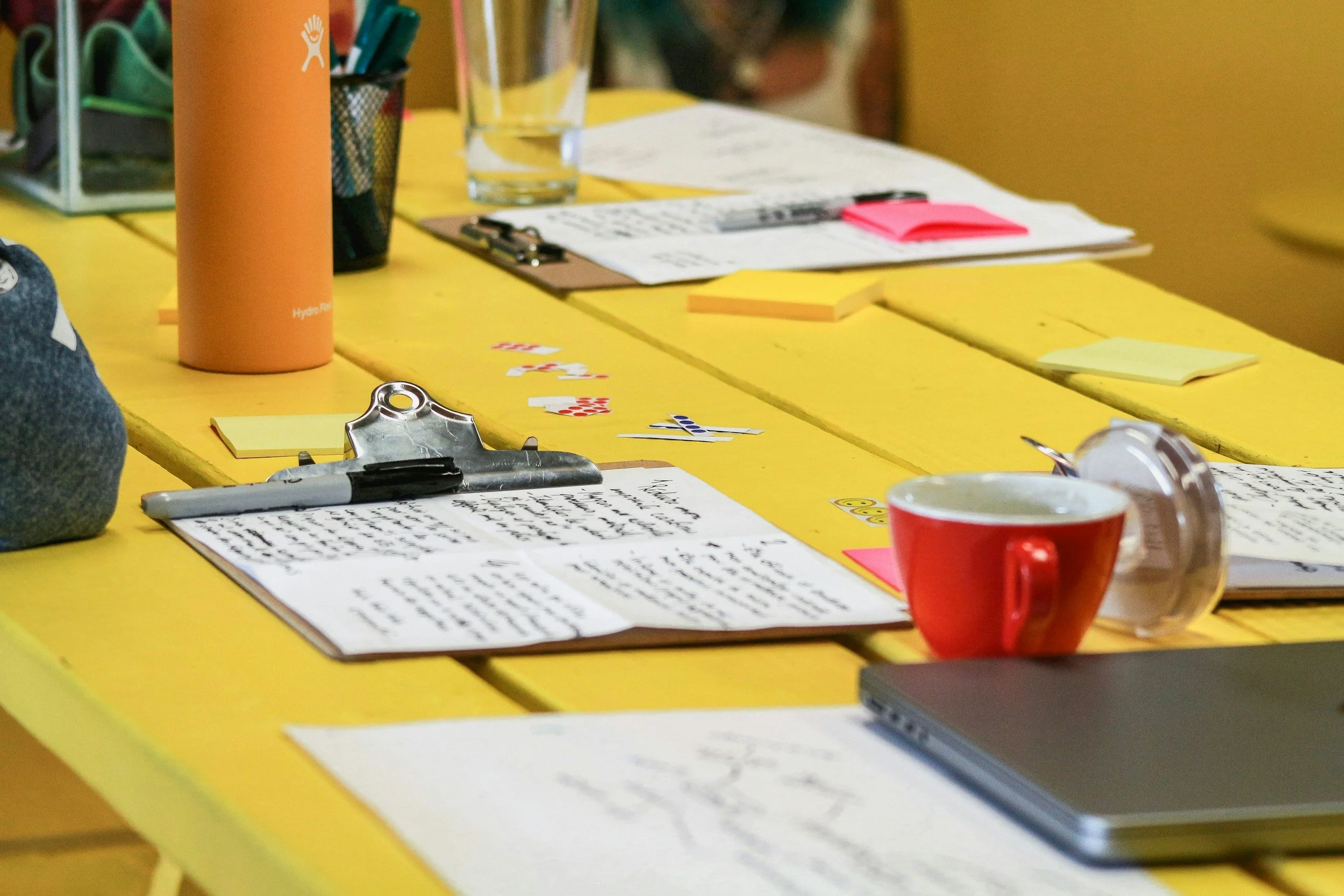
Photo by Unsplash
Opening Scene: The Gathering
Last week, I spent two days immersed in the "design lab" event, held by the Changewell Project along with approximately 100 others from SPA 4 (central LA). Some of the attendees were friends I've worked with for years, but the vast majority were people I'd never met before. We did a quick survey at my table, and had four service providers, five people with lived experience, three people from advocacy organizations (two of us from SELAH), and two folks from political or bureaucratic offices.
"I always advocate for building services organizations starting with the needs of the guest or client, then building the support system keeping them first in mind."
I was happy to see the majority of folks being from the direct services side. I always advocate for building services organizations starting with the needs of the guest or client, then building the support system keeping them first in mind.
The End of LAHSA and the Birth of HSH
Last year, LA County announced the formation of the new Department of Homelessness Service and Housing (HSH)to replace LAHSA, the beleaguered agency that remained so unmanageable that even their most stalwart defenders gave up on them.
I've written about the "homelessness industrial complex" often, and their close relationship with LAHSA allowed many of them to spend vast funds without being held accountable. LAHSA has suffered accusations of malfeasance for years, some proven, and their carelessness along with their ineffectiveness led to their eventual disbanding. But what about the agencies who benefitted from their largesse? Will they be willing to change how they provide services?
Many of them have been hit hard by funding cuts and had to lay off staff. This is especially hard on them since last year we made the most progress in housing folks in decades, and it took every one of those people to make it happen. Though there might be a tiny but important upside to this short, sharp shock. Organizations are smaller now, with fewer resources than ever before, but the people I know doing this work will rise to this challenge. We can't walk away; it's not in us to leave people suffering, so we will create something new, resilient, and even better at ending chronic homelessness forever.
"We've been invited to test Radical Hope and Radical Hospitality in real time. To build an agency that is human-focused, transparent, accountable, effective, and efficient."
We've been invited to test Radical Hope and Radical Hospitality in real time. To build an agency that is human-focused, transparent, accountable, effective, and efficient. Looking around that room, at the years of experience and raw talent all focused on creating something new, gave me hope.
Act I: The Problem-Framing Process
Understanding LA County's Service Area Complexity
LA County is huge, nearly 5,000 square miles, and diverse, with over a hundred languages spoken within its borders. It also includes mountains, deserts, the ocean, and thousands of miles of roads, all of which help to divide the place into disparate regions with specific needs. So there's no one-size-fits-all for anything we do here. Diversity is our superpower, though, and the approach HSH is taking through these convenings takes advantage of that strength.
Our event was one of eight planned across the county. Some of you will already know that LA County has been segregated into eight Service Areas (formerly Service Planning Areas). These SAs are somewhat arbitrary in where they exist but not in their effect, creating almost impenetrable barriers when it comes to funding (e.g., an agency can exist in all SAs, but each location will be funded separately. If an agency only exists within one or a few SAs, they can only operate within those regions).
The Data Ownership Crisis
This ignores a fundamental reality: that the people we serve live what are, by definition, 'transient' lifestyles. If I leave the SA where my service provider is and move to another SA where they don't operate, none of my data comes with me, and I need to start over. This is core to the Data Ownership issue that I'll be covering more in-depth soon.
"Each time I say it out loud, it seems more ridiculous. I don't know who this kind of planning serves, but it's certainly not the people we're trying to help."
It's something as simple as this that has a crippling effect on our ability to serve people. Plus, it's so arbitrary on its face that our guests/clients chafe at the inconvenience. Each time I say it out loud, it seems more ridiculous. I don't know who this kind of planning serves, but it's certainly not the people we're trying to help.
So, we have a huge, diverse, multilingual county with 89 cities, within three quasi-governmental bodies called COGs, several Continua of Care (e.g., West Hollywood, Glendale), eight SAs, and that's not even counting 15 City Council and five County Supervisors offices. As always, we have our work cut out for us.
The Five Design Areas: A Human-Centered Approach
The approach Changewell is taking is firmly grounded in my favorite methodology, Human-Centered Design. It's been a few years since I've been taken through that process, so being immersed in it for two days felt wonderful. They broke the work into five general topics, with several questions inside each area. The topics were:
1. Strategies to Reduce Disparities
How to address racial and demographic inequities
2. Foundations for Success
Supporting all service providers regardless of size
3. Feedback and Ongoing Co-Design
Ensuring transparency and accountability
4. Collaboration and Partnerships
Breaking down silos between agencies
5. Systems & Systems Performance
Creating transparent pathways from outreach to housing
Choosing to Tear It All Down and Rebuild
Each of us was asked to choose which area we'd like to focus on. This was tough. I've spent years working to build collaborations and partnerships (question 4). It's why I created SecondGrace.LA, which is how I learned about feedback and ongoing co-design (question 3). I talked with the facilitator (long-time friend, Alisa Orduna) and chose to join her group working on creating feedback mechanisms. It was apparent within the hour that I'd chosen the right group for me.
"There are always two ways to approach fixing broken systems: tweaking and working at the edges, or tearing it all down and starting fresh. I'm definitely in the tearing-it-all-down camp."
There are always two ways to approach fixing broken systems: tweaking and working at the edges, or tearing it all down and starting fresh. I'm definitely in the tearing-it-all-down camp, and so were most of the team.
The Power of Lived Experience and Diverse Perspectives
Two people in our group worked inside government agencies. The rest of us worked in direct services. Plus, we had three founders who had run our own organizations, so we knew how to make things work with little or no resources.
The afternoon was intense. Human-Centered Design is slow and deliberate, and our facilitator was well-practiced. Equity is key to keeping the process balanced, and beyond the three founders over half of our group had lived experience. We ranged in age from the early 20s to the mid-60s, and 7 of the 10 of us were BIPOC.
"The problems we were addressing were all problems we had encountered personally, so we'd been thinking about solutions long before we all met."
The last few hours of the day brought us all closer together, and our early prototype sounded strong. The problems we were addressing were all problems we had encountered personally, so we'd been thinking about solutions long before we all met. There were just a few more steps before we presented to the whole group the next day.
What's Next: Building the Future of HSH
Check in next week for the conclusion of the story and insights into what the new HSH could be!
Related Topics:
Data ownership in homeless services
Service area barriers in LA County
LAHSA vs HSH: What's changing
Human-centered design methodology
Lived experience in policy design
Breaking down the homelessness industrial complex
Share Your Thoughts: Have you experienced service area barriers as a client or provider? What would you change about how homeless services are coordinated?
Read more about systemic solutions to homelessness: https://open.substack.com/pub/secondgracela
Support our advocacy work: https://www.gofundme.com/f/fuel-hope-with-second-grace-la-this-giving-tuesday
Connect with Second Grace LA: https://linktr.ee/secondgracela
Tags: #HomelessServices #LACounty #HSH #HumanCenteredDesign #SystemicChange #RadicalHope #ServiceReform #DataOwnership #CommunityEngagement