
When the 3-Day Notice Arrives
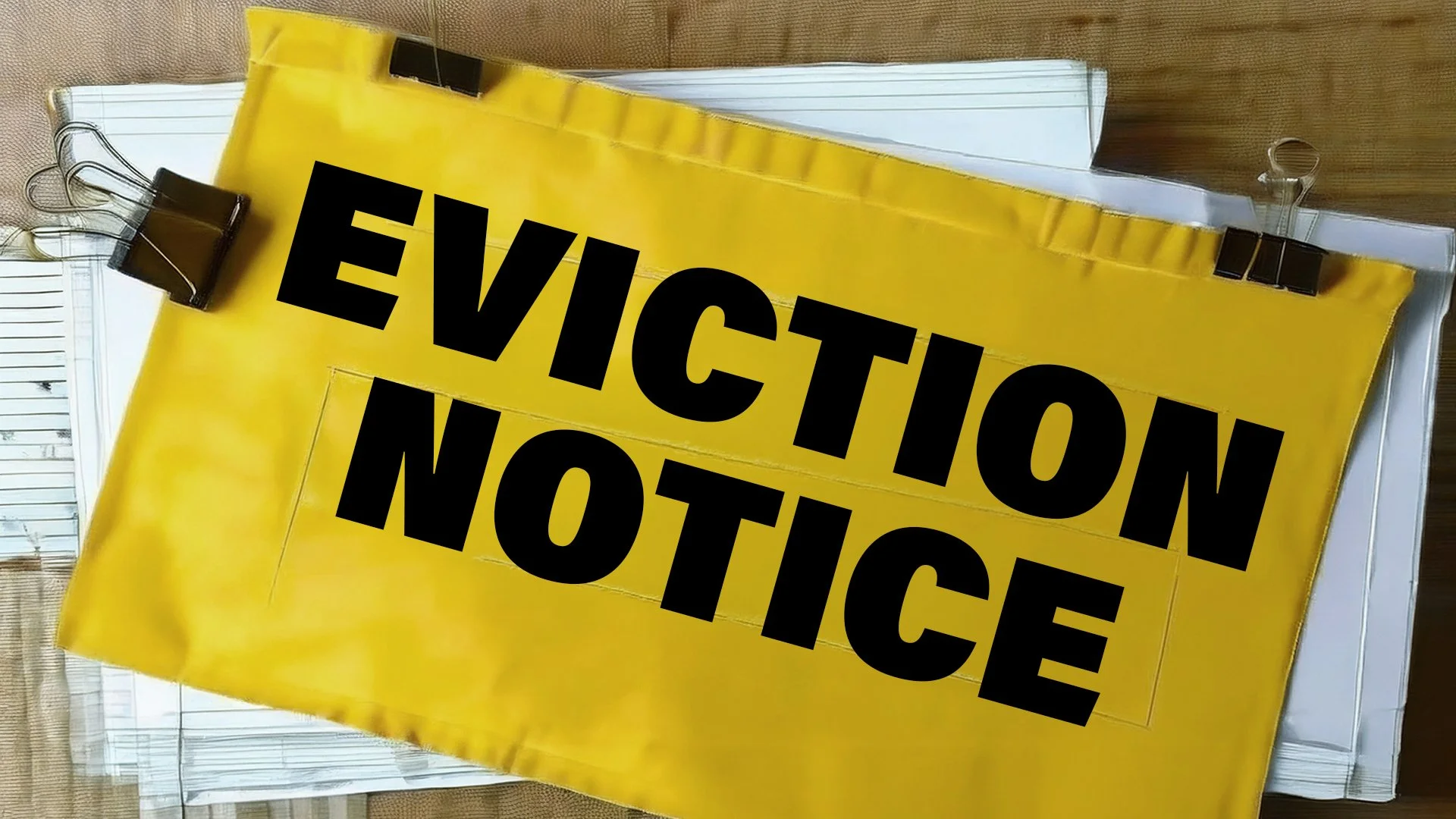
"A notice isn't a verdict. Knowing the difference changes everything."
Staying Housed | Part 1 of 4 By Paul Asplund | Letters to the Housed | SecondGrace.LA | June 2026
A friend of mine has been holding her household together for almost five months, since the morning ICE took her husband. She's self-employed, and her monthly income runs between $1,500 and $2,000, depending on the week. The rent is $2,029, and, for a while, she managed. Then she fell behind.
When the three-day notice arrived, she texted me late at night. She needed several thousand dollars to cover the gap, had most of it in hand, and her building manager had told her the owner wouldn't accept partial payment. He also told her it would be better if she just left. That going to court would cause her a lot of trouble.
She didn't leave, and over the following days, with help from St. Margaret's Center, the Housing Rights Center, and a network of people who knew where to look, she found enough support to hold on. Her husband's hearing is still pending, and she's still in her apartment.
Her situation is not unusual. Across LA County right now, families are navigating exactly this combination: a breadwinner in ICE custody, income cut in half or more, landlords — sometimes new ones who bought the building recently and have less patience for hardship — unwilling to wait. The eviction notice is only the most recent of a series of shocks and traumas that started months or years earlier.
The most important thing I told her, the first night, was this: a three-day notice is not an eviction. And she did not have to leave.
What a 3-day notice is, and what it isn't
Under California law, a notice from your landlord is a required first step before an eviction can even be filed in court. The landlord cannot physically remove you. The eviction process doesn't begin until an Unlawful Detainer — a formal court document — is served on you. Only then do you have a legal deadline to respond, and that deadline is five business days.
What this means in practice: receiving a three-day notice is the moment to act, not the moment to pack. Many people self-evict when they receive one. Some leave because they don't know they have rights. Some because a building manager tells them, as one told my friend, that it would be better if they just went. Leaving voluntarily, without a court order, is exactly what a landlord who wants the unit back is hoping for.
"I will not leave, because I am not refusing to pay; I have simply fallen behind on one rent payment."
That's what my friend told her building manager when he came by on a Saturday. She was right on every count. And when he changed the code on the parking gate so she couldn't get her car out, that crossed into illegal harassment territory. Under California law, tenants have the right to call the police in that situation and require the landlord to restore access. A landlord who refuses to accept partial payment while applying constant pressure to vacate is not operating in good faith, and that pattern of behavior is relevant if the case ever reaches a courtroom.
The Housing Rights Center can help document harassment and send formal letters to landlords explaining tenant rights. Their hotline is (800) 477-5977. A single letter from an organization like HRC often changes the temperature in a building considerably.
How ICE detention becomes a housing crisis
The connection between immigration enforcement and housing instability is direct and underreported. When a family's primary earner is detained, the income loss is immediate. Rent and bills don't pause. The remaining family member — often a spouse working part-time or in informal employment — is suddenly expected to carry the full financial load while also navigating the immigration system, the school system, and, in many cases, a housing crisis.
My friend's husband has been in ICE custody for close to five months. She has applied for rental assistance. She has applied for food stamps. She has a lawyer working on her husband's case. She does all of this while cleaning houses five or six days a week and making sure her youngest child, who is still at home, knows the police are not coming to take them away.
Her child saw the three-day notice and got scared that the police would come, so she sent them off with a relative so they wouldn't have to watch what happened next. Then she stayed home alone and waited, afraid to leave. Afraid her locks would be changed while she was working.
This is not a story about someone who failed to pay rent. It's a story about what happens to a family when the federal government kidnaps one of its members.
New protections you may not know about
California law changed significantly at the start of 2026, and most renters haven't heard about it.
Every unit in the city of Los Angeles now has just-cause eviction protection. Landlords must declare a legal reason before they can pursue eviction. Wanting the unit back is not a legal reason. If you have been in your home for more than six months, you are covered.
Rent-stabilized units in LA are capped at a 3% increase through June 2027. If your notice claims you owe money tied to an improper rent increase, that increase may be illegal.
Under AB 863, if you prefer to communicate in Spanish, Chinese, Tagalog, Vietnamese, or Korean, landlords are now required to provide translated copies of all notices and eviction-related documents. You will need to notify your landlord of this preference in writing.
And under AB 246, if your Social Security benefits were delayed or disrupted through no fault of your own, you have an affirmative defense against eviction for missed rent tied to that disruption. Courts can issue stays of up to six months.
The ecosystem most people don't find until it's almost too late
Here is what we found for my friend, and what exists for anyone navigating a similar situation right now.
The city's Stay Housed LA program is the best starting point for anyone facing eviction. The city council approved a $107 million contract in March 2026 to expand eviction defense services through the Legal Aid Foundation of Los Angeles, the Housing Rights Center, and the Liberty Hill Foundation. Reach them at stayhousedla.org or (888) 694-0040. Tenants with legal representation are far less likely to face displacement than those who show up in court alone.
St. Margaret's Center in the South Bay has been a direct resource in my friend's case, helping with utility bills and connecting her to the South Bay Renter Protection and Homelessness Prevention Program through the SBCCOG. If you are in the South Bay, their referral form is at sbrentprotect.org.
For families dealing with ICE detention specifically, the Immigrant Defenders Law Center runs a rapid response hotline at (213) 833-8283, available Monday through Friday, 9am to 4pm. CHIRLA provides immigration legal services and can connect families to additional support. The LA County Office of Immigrant Affairs can be reached at (800) 593-8222.
For emergency rental assistance while waiting for longer-term programs to process, call 211. The United Way can connect you to emergency rental funds and CES referrals. LA County Rent Relief is also reachable at (877) 849-0770 or through DCBA at (800) 593-8222. Note that the program website (lacountyrentrelief.com) opens and closes with application rounds — check for current availability.
One more resource worth knowing about: the STEP Fund, which provides interest-free loans for low-income residents facing eviction within 30 days due to a financial setback. Apply at tfaforms.com/4958390 or call (310) 363-0579.
What I know about this from the inside
I have been in different versions of this situation. There was a period when I was descending into homelessness, and the relationship between me and my housing was unraveling faster than I could track. Landlords know when a tenant is vulnerable. The late payments, the avoided conversations, the sense of losing ground — all of it communicates something, and not all landlords respond to it with patience.
What I didn't know then was that confusion is a tool. A building manager who tells you to leave so you don't get an eviction on your record. A lease full of language designed to obscure rather than clarify. These things work because most renters don't know what the law actually says. The system does not announce your rights to you. You have to find them.
There is also the version of this that doesn't involve a landlord. People going through a divorce can be locked out of their house. Domestic dissolution — the end of a relationship, a family breaking apart under pressure — are among the most common and least discussed pathways into housing instability. We will talk more about this next week.
What to do right now if you've received a notice
Do not self-evict. A notice is not a court order. You cannot be physically removed without one.
Go to stayhousedla.org or call (888) 694-0040 today, even if an eviction filing hasn't happened yet.
Check whether your unit is rent-stabilized at LAHD's online lookup. Knowing your RSO status tells you which protections apply.
Document everything. The notice, texts from your landlord or manager, any pattern of harassment including access restrictions, changed codes, repeated unannounced visits. This record matters.
If you are also dealing with a detained family member, call ImmDef at (213) 833-8283 and CHIRLA alongside your housing resources. These crises are connected and should be addressed together.
If you receive a formal Unlawful Detainer from the court (not just a landlord notice), you have five business days to respond. Use the Tenant Power Toolkit to file a response on time, even before you reach a lawyer.
My friend is still in her apartment and her husband's case is still pending. She is still cleaning houses, still checking in with the programs working on her case, still managing more than any person should have to manage alone. She found her way through partly because she called me, but mostly because the people who answered her calls knew exactly what to do.
Most people facing this don't have that call to make. That's what this series is for.
Next week we'll look at the broader landscape: how housing instability starts, the cascades that turn a health crisis, a job loss, or a family rupture into a pathway toward homelessness, and the systems being built right now to catch people before they fall that far.
More soon.
Paul
Resources
Eviction defense
Stay Housed LA | stayhousedla.org | (888) 694-0040 | Free legal help for tenants facing eviction
Housing Rights Center | housingrightscenter.org | (800) 477-5977 | Eviction resources, harassment documentation, Tenant Power Toolkit
Legal Aid Foundation of LA | lafla.org | (800) 399-4529 | Eviction defense, habitability, RSO assistance
Eviction Defense Network | Walk-in clinics across the county, sliding-scale representation
LAHD Renter Protections | housing.lacity.gov | Check RSO status, current rent increase limits
Emergency rental assistance
211 | United Way emergency rental assistance and CES referrals
STEP Fund | tfaforms.com/4958390 | (310) 363-0579 | Interest-free loans for residents facing eviction within 30 days
LA County Rent Relief | lacountyrentrelief.com (site may be offline between application rounds — check for current windows) | (877) 849-0770 | DCBA main line: (800) 593-8222
St. Margaret's Center | sbrentprotect.org | South Bay renter protection and homelessness prevention
For families with a detained family member
Immigrant Defenders Law Center (ImmDef) | Rapid Response Hotline: (213) 833-8283 | Mon–Fri, 9am–4pm
CHIRLA | chirla.org | Immigration legal services and family support
LA County Office of Immigrant Affairs | (800) 593-8222 | immigrants@dcba.lacounty.gov
Letters to the Housed | secondgracela.substack.com | SecondGrace.LA
#HousingJustice #TenantRights #EndHomelessness #RadicalHospitality #SystemicChange #CommunityAction